

In this one-off interactive, gamified workshop, we’ll simulate real-world work scenarios at your organisation via a board game, helping you identify and eliminate bottlenecks, inefficient processes, and unhelpful feedback loops.
Workshop Details



Companies love measuring token usage. Petra Wille would rather you counted experiments.
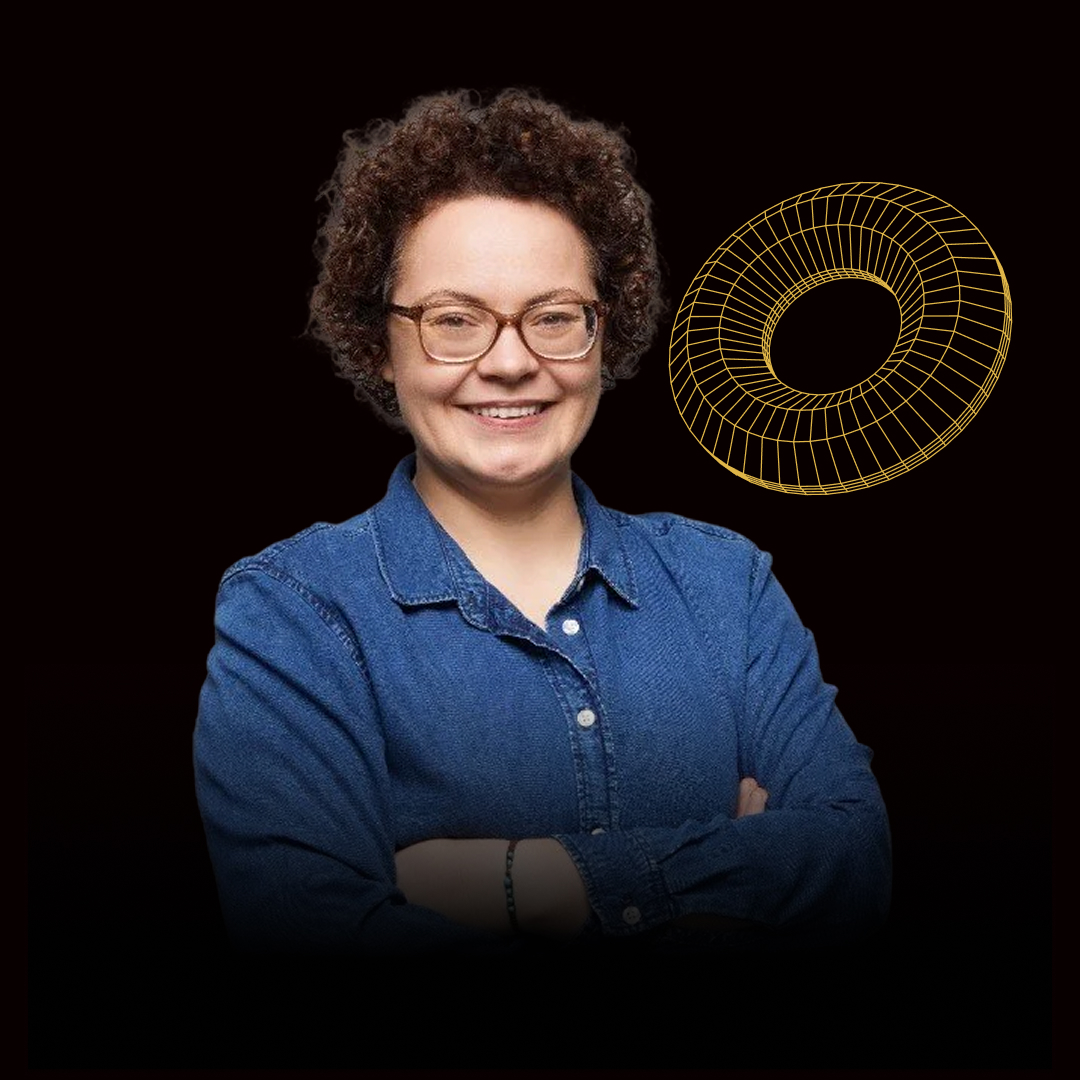
Petra coaches the layer of product leadership that rarely shows up in AI content: the heads of product and VPs who line-manage product managers, designers and researchers, sit on the P&L, and get looked at first when the board wants an AI story. That is the layer where AI stops being a tooling question and becomes an organizational one.
Most conversations about AI in product management are about the individual contributor. What does discovery look like now, which tools should I use, is my job at risk. Petra works one level up, and the picture from there is different. She describes four things product leaders are actually being handed right now: context engineering, so the organization's knowledge is reachable by the models; orchestrating their own and their team's work more efficiently; deciding how AI changes the product itself; and whether the business model and pricing need to change with it. Different organizations sit at wildly different maturity levels across those four.
She is blunt about how early most companies still are. Half the room at a recent Teresa Torres workshop in Hamburg had never opened Claude Code, and these were product leads. That tracks with McKinsey's HR Monitor data showing only 16 percent of the German workforce using AI daily, even after a year in which usage doubled.
The part worth sitting with is the maturity curve. Early experimentation makes everything slower. More noise, more dead ends, more tools that go straight into the bin. Petra sees teams give up right there and conclude AI does not work. The ones who get through it have usually done one specific thing: agreed on what they are optimizing for before they start, so they can tell an efficiency gain from a distraction. She also has receipts on the shortcuts that failed. Teams that ditched engineers and vibe coded everything. Teams that thought Claude could write the backlog and the product manager was surplus. Teams that let product absorb design. None of it held, because people build professional gut feeling over years and that does not transfer.
On discovery she does not budge. AI can find patterns across interviews, stress-test your interview guide, and play devil's advocate on your assumptions. It cannot replace being in the room. Synthetic users interviewed by an agent produce artifacts nobody in your team has a visceral reaction to, and the visceral reaction is the point. Watching a real user struggle with something obvious is what makes an engineer want to fix it.
The four AI workstreams landing on product leaders: context engineering, workflow orchestration, product-level AI, and business model and pricing. Most orgs are strong in one and absent in the other three.
Measuring token usage rewards the wrong behavior. Count experiments run and learnings shared, and reward the ones that solved a different problem than intended.
The engineer-to-product-manager ratio has moved. Eight engineers per product person was already tight. In teams where engineering has genuinely sped up with AI, Petra sees three working better.
Learning headlines beat training budgets. Give every direct report one learning focus valid for three to four months, revisit it in a one-on-one, and keep it back-of-the-napkin.
Every experiment that removed a discipline and handed its work to AI failed. Human in the loop is not a compliance line, it is why the output is any good.
The AI capability gap is a leadership problem. A motivated individual doing two hours on a Monday evening cannot close it, and expecting them to is a way of avoiding the systemic conversation.
"You still have to do the homework, you still have to do the discovery, you still need to talk to real people."
"They're no longer prompting the system. They built the system that prompts itself. But that's super few cases."
Petra Wille is an independent product leadership coach who has been working with product teams and the people who lead them since 2013. She wrote STRONG Product People and STRONG Product Communities, created the #52questions coaching card deck and the Product Leadership Wheel, and co-organizes Product at Heart in Hamburg, one of Europe's largest product conferences. She co-hosts the All Things Product podcast with Teresa Torres and publishes a quarterly newsletter for product leaders.
Petra Wille's website and blog
Petra's quarterly newsletter for product leaders
Product at Heart and the video archive
All Things Product podcast with Teresa Torres
Harvest, acquired by Bending Spoons in 2025
IKEA retrained 8,500 contact centre agents as interior design advisors
McKinsey HR Monitor data on AI use in Germany
Find the Stellar Work Podcast on Spotify, Apple Podcasts, YouTube, and more.
For weekly essays on transformation, flow, and AI in knowledge work, join the Stellar Work newsletter.
The Stellar Work Podcast is hosted by Ben, founder of Stellar Work. Conversations with the people shaping how work actually gets done.


Not Sure Where to Start?
In this one-off interactive, gamified workshop, we’ll simulate real-world work scenarios at your organisation via a board game, helping you identify and eliminate bottlenecks, inefficient processes, and unhelpful feedback loops.
Workshop Details