


In this one-off interactive, gamified workshop, we’ll simulate real-world work scenarios at your organisation via a board game, helping you identify and eliminate bottlenecks, inefficient processes, and unhelpful feedback loops.
Workshop Details



## #60 Benjamin Igna - The substitutes for real work
**Every industry has invented a substitute for the actual work, and the best practitioners have quietly stopped using it.**
Sixty episodes in, Ben takes a solo episode to do something the show rarely does: look back. After five weeks sick in bed, he revisits the practitioners from the last season and finds one pattern repeating in every conversation. His first job at 22 was putting sticker outlines of tools in workers' drawers at a bearings factory, telling people who knew the job far better than he did where to put their things. He lasted a few months. The sticker, it turns out, never went away. It just changed clothes. Sometimes it's a sprint ceremony. Sometimes it's an AI pilot with no measurable outcome. Sometimes it's a Miro board with twenty colours and no decision in it.
## About this episode
The episode is built around three substitutes for real work. The first is process theater. Sander Hoogendoorn, CTO at the Amsterdam e-commerce company iBOOD, removed sprints, retrospectives and the Scrum Master role years ago, on the logic that agile was never a process but the ability to build your own. His team ships a Friday-afternoon request to production before lunch, and his onboarding has no four-week curriculum because there is no process to onboard people into, only the technical and business domain itself. Nadja Bohlmann, who runs the Schaeffler production system across a hundred plants and came out of eight years as a military officer, refuses to let lean become floor markings and stickers. Lean is culture. If top management won't change its own behaviour, it shouldn't ask anyone else to change theirs.
Then there's the research. Karen Eilers and Christiaan Verwijs, two organizational psychologists, set out to make the "agile mindset" measurable and found four dimensions: attitudes toward learning, collaborative exchange, customer co-creation, and empowered self-guidance. The uncomfortable finding is that installing new artifacts, ceremonies, Jira boards and Miro sessions does not move any of those dimensions. Leadership behaviour does. As Ben puts it, every transformation he's seen in a decade has been 90 percent theater and 10 percent conditions.
The second half is AI, the substitute Ben calls tool theater. Four windows onto the same phenomenon: an Uber developer-platform engineer on why an agent is useless without tendrils into your real systems, a Snapchat engineering manager on why every human in the loop is a bottleneck and why 100x belongs to lone individuals with no organization to slow them down, a UX researcher on cognitive load and the measured 20 to 40 percent rise in time-on-task with AI tools, and Marcelo Lopez on plausibility-induced blindness. The AI tells you confidently that the mushroom is safe, and you take a bite. The MIT finding sits underneath all of it: 95 percent of generative AI pilots show zero measurable business impact.
## Key takeaways
- The substitute is comfortable and shipping real work is hard, so organizations build ceremonies, pilots, dashboards and reorgs that look like change without requiring it. Ben's name for the corporate version, borrowed and adapted: the pajama top.
- Busy people count inputs, effective people count outcomes. Every transformation dashboard Ben has seen measures inputs (standups completed, teams trained, workshops delivered) because outcomes are hard to measure. The dashboard is the modern sticker in the drawer.
- You cannot change another person's mind and you shouldn't try. You can only create conditions where they change on their own, by putting them close to a customer, trusting them with real decisions, and not punishing the behaviour you want to see.
- AI doesn't remove the hard parts of work, it moves them. The companies in the 95 percent treat AI as a replacement for thinking. The ones who treat it as an amplifier for people who already think well are the ones the industry will copy in five years.
- Think first, prompt second. The MIT EEG study found the worst outcome on every measure came from prompting the LLM as the first move. The best came from thinking first, then using the model to refine.
- The junior pipeline is quietly disappearing and nobody has a serious answer. Sander and Shopify both hire more juniors, not fewer, because juniors adapt to new tools faster than seniors who rusted into the old way.
> The work is to work. And judgment, presence, ownership, attention, we can put it off with rituals, dress it up with tools, hide it behind a remote camera, outsource it to a model. But at some point somebody has to make a decision they don't have enough data for. Nobody has figured out a substitute for that.
## About the host
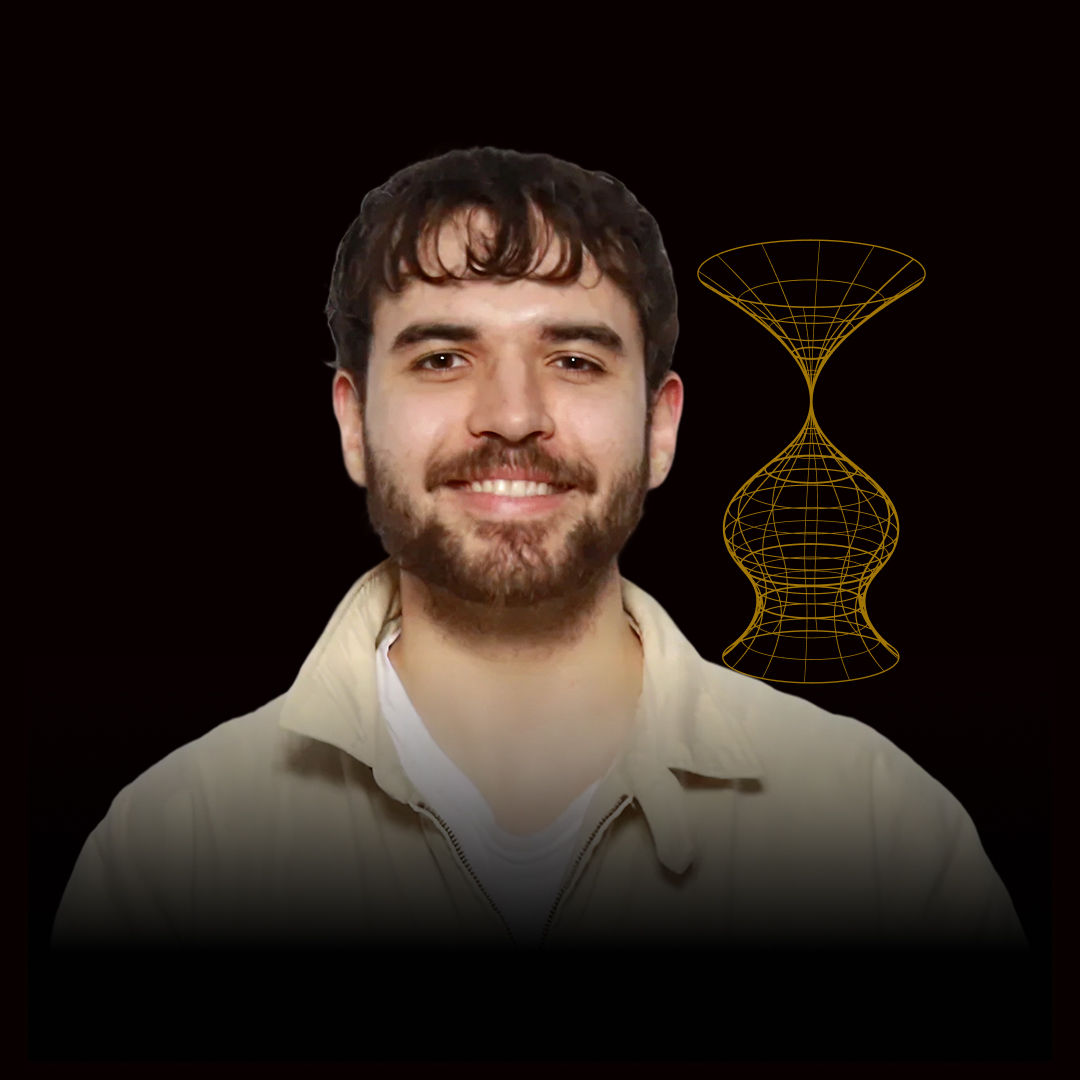
Ben is the founder of Stellar Work, a consulting firm that does organizational analysis and flow optimization, finding the bottlenecks that make R&D and operations slow and fixing them, increasingly by identifying where AI actually helps at those bottlenecks. The Stellar Work Podcast, also known as Captain's Log, features practitioners on transformation, flow, and the future of work.
## Resources mentioned
- [Sander Hoogendoorn, CTO at iBOOD](https://nl.linkedin.com/in/aahoogendoorn)
- [Karen Eilers, agile mindset research](https://de.linkedin.com/in/dr-karen-eilers)
- [Christiaan Verwijs, The Liberators / Columinity](https://medium.com/the-liberators)
- [Columinity research on the team-level agile mindset](https://blog.columinity.com/author/karen/)
- [MIT "Your Brain on ChatGPT" EEG study](https://arxiv.org/abs/2506.08872)
- [MIT "The GenAI Divide: State of AI in Business 2025"](https://nanda.media.mit.edu/)
- [Gergely Orosz, The Pragmatic Engineer](https://newsletter.pragmaticengineer.com/)
- Nadja Bohlmann, Schaeffler Production System (episode not published)
- Marcelo Lopez (critical thinking and AI episode, episode not published)
## Listen & subscribe
Find the Stellar Work Podcast on [Spotify, Apple Podcasts, YouTube, and more](https://stellarwork.start.page).
For weekly essays on transformation, flow, and AI in knowledge work, [join the Stellar Work newsletter](https://substack.com/@stellarwork).
---
*The Stellar Work Podcast is hosted by Ben, founder of Stellar Work. Conversations with the people shaping how work actually gets done.*


Not Sure Where to Start?
In this one-off interactive, gamified workshop, we’ll simulate real-world work scenarios at your organisation via a board game, helping you identify and eliminate bottlenecks, inefficient processes, and unhelpful feedback loops.
Workshop Details