



In this one-off interactive, gamified workshop, we’ll simulate real-world work scenarios at your organisation via a board game, helping you identify and eliminate bottlenecks, inefficient processes, and unhelpful feedback loops.
Workshop Details


Outcome equals intelligence plus agency, and AI is making the first half cheap.
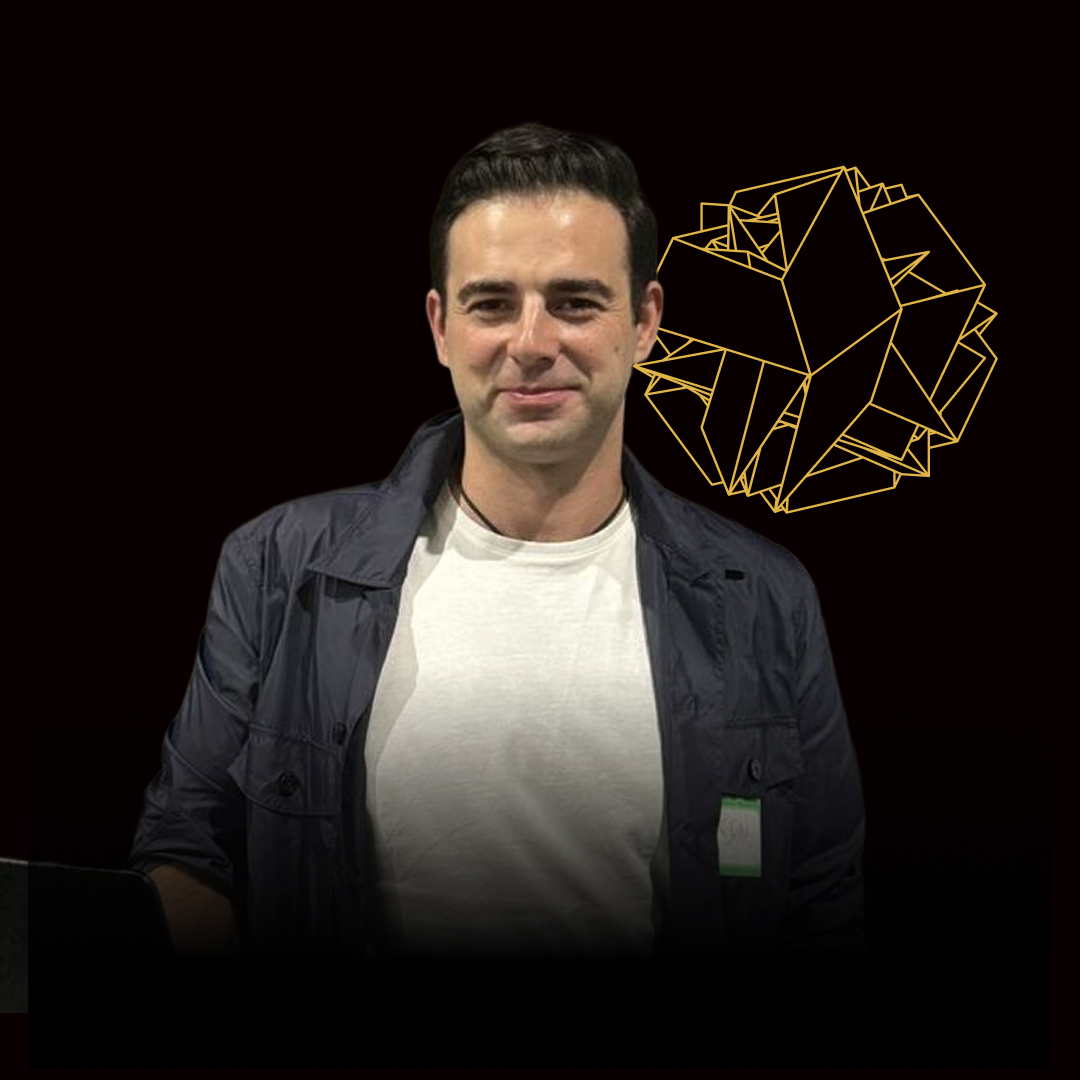
Yevgen Nebesov is a systems architect who spent years watching good ideas in his projects go nowhere because the power arrangement around them didn't support them. So he went looking for a way to map that arrangement and change it from wherever you happen to sit in the organization, with or without a mandate. The result is the power loop, a book called The Architecture of Power, and this conversation.
Yevgen's starting point is a formula: outcome equals intelligence plus agency. Most of us invest in the first term, our skills and ideas, and then wonder why nothing gets implemented. Agency, the capacity to get something decided and carried out by other people and things, settles the outcome, and AI makes this more true by turning intelligence into a commodity. A bridge in 2050 might be designed by an AI and built by robots. Someone still has to convince the town it needs a bridge, collect the approvals and find the money.
"Both of us are intelligence traders. We exchange our skills and intelligence for money. In future, intelligence becomes more and more abundant through AI. So our core capacity will move to agency."
The power loop is his map. Power flows through six domains: events, narratives, agendas, beliefs, decisions and institutions. An event is something that happened and got registered, a system crash for example, and it carries no meaning until a narrative gives it one. "Technical debt" is such a narrative; the word debt brings along everything the business already believes about repayment, which is why it lands on agendas where "we have a technical problem" gets waved away. Narratives fight for the agenda, the agenda produces decisions, decisions settle into institutions, and institutions stabilize behavior until someone runs the loop again. Hierarchy is missing from the model on purpose. A role is one driver of authority among several, and replacing the person in it is, as Yevgen puts it, one of hundreds of ways to change the arrangement and probably not the most peaceful one.
"Power is not something one can possess. It is not a property of a person. It is rather an arrangement, like a network. And the goal should be not to become more powerful, but to change the entire arrangement."
From there the conversation turns practical. The Power Canvas is a snapshot of the loop for one situation, and the book holds roughly 200 structural tactics you combine into a program of small moves. Yevgen's own example is a weekly decision meeting that stopped being useful: start making the same decisions somewhere else, quietly, until the old meeting exists on paper only. Ben raises the consultant's version, walking in with a fresh narrative and stepping into a five-year-old argument you know nothing about, and Chesterton's fence gets its due. The last third leaves the office. Yevgen's example of an actor that works the loop efficiently, sadly so in his words, is the AfD: collect events, build a narrative of an incapable government, attack beliefs, keep the problems on the agenda unsolved. His answer is to create events where people from different epistemic closures still talk to each other. Ben's is a fawn rescue club in his village that gets conservative farmers, hunters and animal rights people into the same field at four in the morning with thermal drones. They agree on little else, and it turns out to be enough.
Power sits in the arrangement of people, roles, rules and objects. The productive question is how to redraw that arrangement from where you stand, whatever your job title says.
In the power loop, events carry no meaning until a narrative names them. If you want a problem on the agenda, name it in the language of the dominant institution. "Technical debt" worked because "debt" already carried a story.
You rarely need power over an institution to change it. Build a parallel one that does the same job better and the old one goes hollow.
Separate the structural change you want from the activation you need from other people. Yevgen sees this as the gap in most activism playbooks: they gather supporters without saying what the supporters are for.
Breaking is easier than building. Yevgen's counter is to create events where people from different bubbles still talk to each other, and Ben's fawn rescue club is one of them.
Yevgen Nebesov is an independent systems architect and consultant based in Bruchsal near Karlsruhe, with more than a decade of work in transport, logistics and medical technology. His field is sociotechnical complexity, the way technical decisions, organizational structures and human behavior interlock, and he helps leaders and change practitioners act from the position they actually hold, with or without formal authority. He is writing The Architecture of Power on Leanpub, publishes the framework and the Power Canvas at architectureofpower.rocks, and gave a TEDxKarlsruhe talk of the same name.
The Architecture of Power (book, Leanpub)
architectureofpower.rocks: the framework and the Power Canvas
Introduction to the Power Loop, on Yevgen's blog
The architecture of power, Yevgen's TEDxKarlsruhe talk
Find the Stellar Work Podcast on Spotify, Apple Podcasts, YouTube, and more.
For weekly essays on transformation, flow, and AI in knowledge work, join the Stellar Work newsletter.
The Stellar Work Podcast is hosted by Ben, founder of Stellar Work. Conversations with the people shaping how work actually gets done.



Not Sure Where to Start?
In this one-off interactive, gamified workshop, we’ll simulate real-world work scenarios at your organisation via a board game, helping you identify and eliminate bottlenecks, inefficient processes, and unhelpful feedback loops.
Workshop Details


