When AI makes code cheap to write, the pressure lands on everything that happens after the code is written.
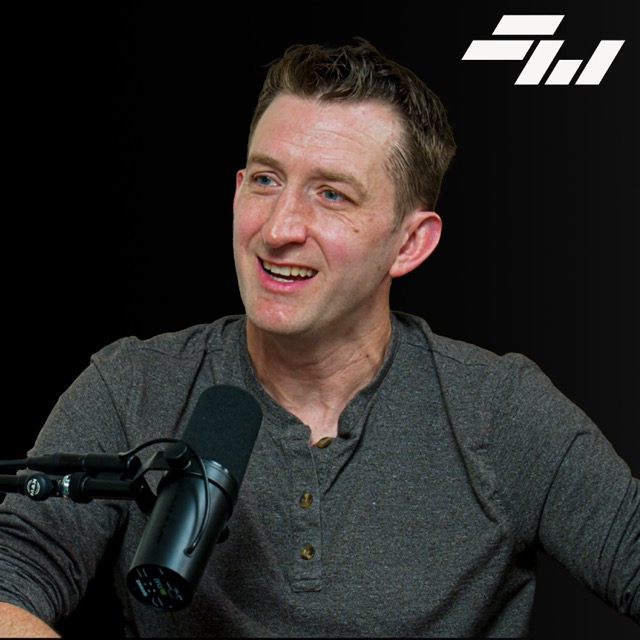
Vasanth Krishnamoorthy leads Web Foundations at Pinterest, the platform team that hundreds of engineers build the web product on. He also runs the developer experience program that tries to measure whether those engineers are getting faster, safer and more effective. That puts him in a good seat to watch what AI does to an engineering organisation once the excitement wears off and the review queue starts to grow.
About this episode
Vasanth explains platform work with a kitchen. Product engineers are the chefs cooking for Pinterest's users. Web Foundations is the kitchen itself: the ovens that have to work, the tools laid out where the chefs expect them, the design system as recipes already prepped, and the build pipeline that gets the plate to the table. The user only tastes the dish. His team's job is to make sure nobody has to think about the kitchen.
"Make the best way to build things the easy way to build it."
From there we get into how Pinterest measures developer experience. Vasanth uses three axes: speed (local dev time, build times), quality (incidents, pages, hotfixes, reverts) and effectiveness, which is mostly sentiment. Do engineers feel confident releasing their changes? Can they debug when something breaks? The metrics are aggregated at team and platform level, reported quarterly alongside a survey, and compared against the industry. Vasanth is open about the limits. He calls measuring productivity a work in progress and warns that it is easy to fall for whatever happens to be measurable. The same framework stretches across web, Android and iOS, though mobile has its own shape with release trains and real-device testing.
Then AI. Vasanth sees coding getting cheaper across the industry, and at Pinterest's scale the cost moves downstream. More pull requests mean more review overhead, more load on CI and more pressure on the release cycle. Those are the bottlenecks he is working on now. He also pushes back on the idea that generated code equals progress. Someone still has to decide what is worth building, judge the architecture and own the result.
"At the end of the day, AI builds it, but you are still as a human accountable to what you build."
We talk about who owns the context agents work from. Pinterest has dedicated agentic teams setting company-wide principles and guardrails, while platform teams like Vasanth's define the defaults for their area: what an AGENTS.md file should contain, where documentation lives, who owns which part of the code. A side effect he likes: documentation written for agents also helps new engineers onboard.
On adoption, Vasanth leans on the law of diffusion of innovation, which he picked up from Simon Sinek. Start with early adopters on real pain, like a tedious migration the team has put off for years. Listen to the skeptics, because they tell you where the guardrails belong. Let the middle majority see results before asking them to move. Pinterest backs this with foundational training, an informal AI guild that has drawn hundreds of people, an AI acceleration series that ties AI work to outcomes, and its "win or learn" value. There is no token leaderboard, and performance reviews do not index on AI usage. Managers talk with engineers about how they use AI, including the grief some strong senior engineers feel about handing work they loved to agents.
The last part is personal. Vasanth built a "leader operating system" for himself: pulse commands that brief him every Monday from Slack, email and metrics, people commands to prepare one-on-ones, growth commands that point out where he could be more direct or concise, and an executive-coaching knowledge base for rehearsing hard conversations. He used it to prepare for this episode.
Key takeaways
Measure the platform and keep individuals out of it. Pinterest aggregates developer experience metrics at team and platform level, which Vasanth credits for keeping metric gaming low.
Cheaper code moves the bottleneck downstream. Review, CI/CD and release are where AI gains currently pile up.
Context for agents is platform work. Defaults for AGENTS.md files, co-located docs and clear code ownership help agents and new hires alike.
Adoption follows a curve. Early adopters on real problems, skeptics for guardrails, results for the middle majority, and fewer mandates than most leaders reach for.
Use AI as a thought partner and keep your judgment. Vasanth's warning to himself is that leaning on it too much costs you the ability to think deeply and critically.
His advice to a manager about to start an AI push is the part I'd underline. Before picking tools, figure out what is actually slowing the team down. Coding, migrations, tech debt or iteration speed each call for a different use of AI. It is the advice we give clients at Stellar Work, and it was good to hear it from inside a company of Pinterest's size.
About the guest
Vasanth Krishnamoorthy, Vasa to his colleagues, is an engineering manager at Pinterest in San Francisco, where he leads Web Foundations: the frameworks, libraries, design systems, framework adoption and developer experience behind Pinterest's web product. He started as a front-end engineer and has a long-standing interest in JavaScript and web performance. Find him on LinkedIn, X and vasanthk.com.
Resources mentioned
Vasanth Krishnamoorthy on LinkedIn
Vasanth on X (@vasanth_k)
Pinterest Engineering blog
AGENTS.md, an open format for guiding coding agents
Simon Sinek, How great leaders inspire action (TED)
Diffusion of innovations, the theory by Everett Rogers
Listen & subscribe
Find the Stellar Work Podcast on Spotify, Apple Podcasts, YouTube, and more.
For weekly essays on transformation, flow, and AI in knowledge work, join the Stellar Work newsletter.
The Stellar Work Podcast is hosted by Ben, founder of Stellar Work. Conversations with the people shaping how work actually gets done.